

Ever noticed a once top-ranking blog slipping down search results without any clear reason? That slow decline is known as content decay, a common challenge in modern SEO. It happens when pages lose traffic, rankings, or engagement over time due to outdated information, stronger competition, or shifting search intent. Even evergreen content can fade if it isn’t refreshed to match evolving algorithms and user expectations.
Understanding content decay is key to achieving sustainable organic growth rather than short-term traffic spikes. As Google continues to prioritize freshness, relevance, and user experience, businesses now need structured content maintenance strategies, not just ongoing content creation.
This guide explains what content decay means, how it impacts SEO performance, how to identify it early, and how to apply proven optimization tactics on how to fix content decay and reverse ranking decline.
What Is Content Decay?
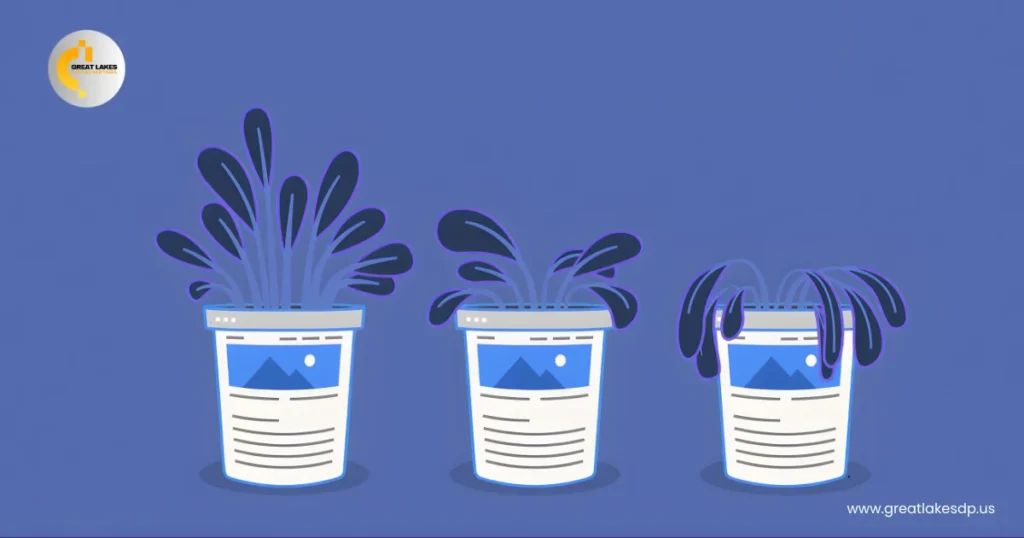
Content decay refers to the gradual decline in a webpage’s organic performance over time. This includes reductions in rankings, impressions, clicks, backlinks, or user engagement. Content that once answered user queries effectively may stop performing as the market evolves, competitors publish superior insights, or information becomes outdated.
While content decay often unfolds slowly, its impact compounds quickly. Pages that are not refreshed slip behind newly updated competitors and may lose topical authority signals that Google values highly.
The Real Impact of Content Decay in SEO on Organic Traffic
Content decay in SEO simply means that even high-quality pages can become less relevant if they fail to keep pace with changing algorithms, user behavior, and industry trends. Search engines prioritize content that remains accurate, helpful, and current.
In SEO decay, several factors intersect:
- Search intent shifts when users want newer solutions or formats.
- Competitors update their content regularly, improving depth and experiences.
- Statistics, tools, or tactics mentioned in older blogs become outdated.
- SERP features change, placing more emphasis on featured answers or authority signals.
Because content decay in SEO affects organic visibility long before traffic tanking becomes noticeable, proactive auditing is essential. Successful brands now adopt continuous content refresh programs to mitigate this decline.
5 Common Causes of Content Decay
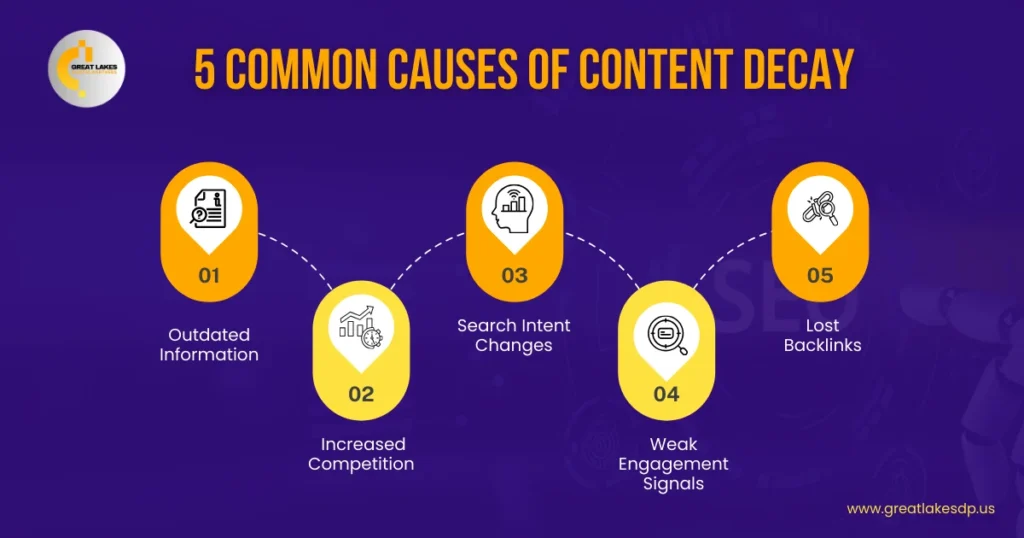
Understanding why content decay in SEO happens provides clarity on how to prevent ranking loss and maintain long-term search visibility. Most ranking declines do not occur suddenly, they result from small, ongoing changes in user behavior, competition, and algorithm priorities that gradually weaken the relevance of older content. Below are the core reasons pages begin to underperform over time.
1. Outdated Information
Data, trends, regulations, or examples age quickly, especially within fast-moving industries.
2. Increased Competition
New entrants publish longer, better-optimized resources that outperform your original article.
3. Search Intent Changes
Algorithms refine what type of content best satisfies queries, shifting preference from general blogs to tutorials, tools, or videos.
4. Weak Engagement Signals
High bounce rates or declining dwell time signals lower relevance to users.
5. Lost Backlinks
If external sites replace links with newer references, your authority weakens.
Every one of these factors compounds over time. Without continuous monitoring, optimization, and updates, even top-performing content eventually experiences decline. Sustainable SEO success requires ongoing content refresh cycles designed to keep pages aligned with current industry trends, search intent, and engagement standards.
5 Warning Signals of Content Decay You Should Not Ignore
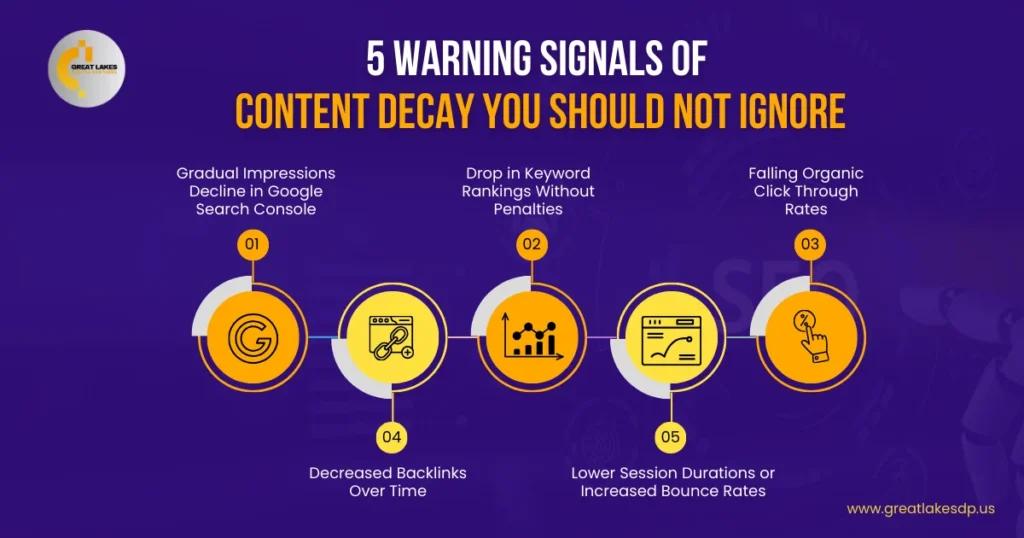
Not every dip in traffic indicates failure. Seasonal shifts, algorithm testing phases, or short-term competition can cause temporary fluctuations. However, consistent negative trends usually signal deeper issues related to content decay. Recognizing early warning signs allows you to intervene before significant ranking losses occur. Below are the most reliable indicators your content may be losing relevance and visibility.
1. Gradual Impressions Decline in Google Search Console
When impressions shrink steadily over weeks or months, it typically means your content is appearing less often in search results. This often occurs before traffic losses become noticeable. A drop in impressions signals that search engines are no longer prioritizing your page for relevant queries, frequently because fresher or better optimized content has taken its place.
2. Drop in Keyword Rankings Without Penalties
If your core keywords slowly slide from the top positions without any manual actions or technical errors reported, it is usually caused by competitive displacement or declining relevance signals rather than algorithmic penalties. This type of ranking erosion is one of the clearest markers that the page is slowly slipping into content decay.
3. Falling Organic Click Through Rates
A declining CTR indicates that while your page may still appear in search results, users are choosing competitors instead. This is often due to outdated titles, meta descriptions that no longer match search intent, or competitors winning attention with better snippet optimization such as improved headlines, FAQ rich results, or video thumbnails.
4. Decreased Backlinks Over Time
Backlink loss suggests your content is no longer considered the most valuable reference within its topic area. Other websites may replace your links with more current sources, consolidate references into newer assets, or remove links during content updates. Losing backlinks reduces authority, directly impacting ranking strength and accelerating content decay.
5. Lower Session Durations or Increased Bounce Rates
Behavioral metrics provide insight into how users respond to your content. Short session durations and higher bounce rates mean visitors are not finding what they expected or are not engaged enough to explore further. Poor structure, overwhelming text blocks, slow page speeds, outdated examples, or weak internal linking can all contribute to declining user satisfaction, which in turn weakens ranking stability.
When two or more of these signals appear together over a sustained period, content decay is almost certainly impacting that page. Identifying these indicators early lets you prioritize content refresh strategies before visibility and conversions drop significantly.
What Is Content Decay in SEO and How Do You Fix It?
Content decay is the slow decline of webpage rankings and traffic due to outdated information, evolving competition, and shifting user intent. The most effective way to fix content decay is through routine content audits, keyword optimization, updating data, enhancing on page SEO, strengthening backlinks, refreshing visuals, and improving user experience.
Why Content Decay Matters to SEO Performance
Ignoring content decay slowly erodes domain authority and weakens trust signals across your website. Old pages lose topical relevance, dragging down internal linking pathways that support newer content.
From an ROI perspective, refreshing content affected by content decay is significantly cheaper and more effective than producing new pages from scratch. Historical optimization consistently yields faster results because search engines already recognize indexed pages.
Recent SEO trends increasingly prioritize content updates as a core strategy for improving rankings and preserving organic traffic performance.
How to Fix Content Decay Successfully
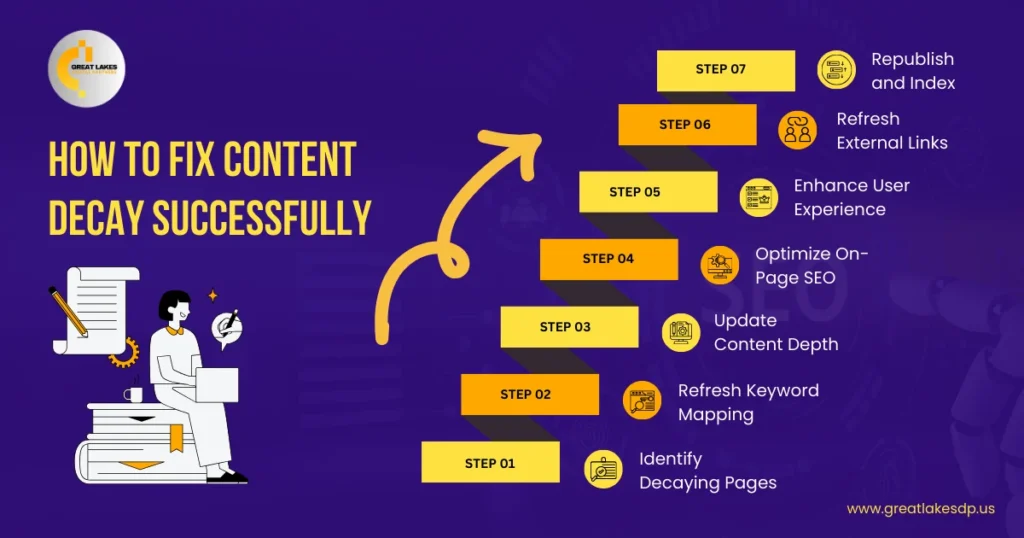
Below is an actionable roadmap on how to fix content decay in a structured, scalable manner.
Step 1: Identify Decaying Pages
Use Google Search Console and analytics tools to locate pages experiencing traffic drops year over year or quarter over quarter. Focus on URLs that ranked on page one previously.
Step 2: Refresh Keyword Mapping
Re analyze primary and secondary keywords to reflect modern queries. Intent changes are a central reason why pages need updating.
Step 3: Update Content Depth
Expand sections, refine subtopics, update statistics, and add case studies or examples from recent years.
Step 4: Optimize On-Page SEO
Ensure strong headings, internal linking, image alt text, and structured formatting to enhance scannability.
Step 5: Enhance User Experience
Improve readability, update visual elements, embed short videos, compress load times, and ensure mobile usability.
Step 6: Refresh External Links
Acquire newer backlinks from current authoritative sources to re-establish topical authority.
Step 7: Republish and Index
Once updated, resubmit the URL in Search Console to encourage re-crawling.
Every effective strategy for how to fix content decay builds relevance, authority, and engagement at the same time, ensuring results accumulate sustainably.
When to Seek an SEO Expert in Michigan
A qualified SEO expert in Michigan helps prevent ranking loss through proactive content monitoring and continuous optimization. When content decay in SEO impacts multiple pages, expert guidance ensures updates stay search-friendly while protecting conversions.
With rising competition, the right SEO experts strengthen both local and national search visibility.
Content Decay Recovery with Great Lakes DP

Great Lakes DP helps businesses reverse content decay in SEO by transforming outdated or underperforming pages into fresh, high-impact SEO assets. Our data-driven approach focuses on restoring visibility, improving engagement, and building long-term ranking stability through strategic content optimization.
- Audit and identify pages affected by traffic and ranking decline.
- Update and expand content with authority-driven SEO refresh strategies.
- Optimize on-page structure, internal linking, and user experience for better engagement.
- Implement long-term SEO frameworks to deliver sustainable rankings and conversions.
This structured approach ensures every content update produces measurable improvements in visibility, user engagement, and conversion potential. With consistent optimization and performance tracking, your pages remain competitive and aligned with evolving search engine expectations.
FAQs About Content Decay
1. Does updating old content guarantee ranking recovery?
No recovery cannot be guaranteed, but significant improvements are common when updates align with current user intent, include fresh insights, and enhance on page SEO quality.
2. How often should content updates be performed?
For competitive industries, review core pages every 6 months, supporting articles every 9 to 12 months, and evergreen assets annually.
3. Should I delete pages affected by decay?
Deleting content should be rare. Consolidating, redirecting, or refreshing pages is usually more effective for preserving authority.
4. Can internal links reduce overall content decay risk?
Yes, strong internal link structures distribute ranking strength and support topical relevance across older pages.
5. Are backlinks enough to reverse decay?
Backlinks alone do not solve content relevance issues. They work best when paired with meaningful content updates.
6. Is video content a solution for decaying blogs?
Adding videos increases engagement and time on page but still requires textual optimization to impact rankings directly.
7. Should businesses handle recovery internally or hire specialists?
Small websites can start internally, but growing brands benefit from professional SEO oversight to avoid missed optimization opportunities.
